


Achieve Better Crop Yields By Choosing the Right Farming Equipment

If you are running a farm or managing a large landscape property, having the right dedicated farming equipment is necessary to yield better crops. Running a successful agricultural operation can already be difficult, even when every other aspect is perfectly in place.
What if your soil isn't prepared, or you don't have the machines to plant and harvest on time? This results in decreased yield, harder operations, and delayed plantings. To be productive and competitive, you must have the proper farming equipment to plant and harvest.
If you are in search of the right machinery, you are not alone. Texas alone is home to over 240,000 farms covering millions of acres, and farmers regularly consult experts at reputable tractor dealers in Texas to find the exact equipment for their specific acreage and regional soil types. This blog discusses the most common types of essential farm equipment and how they differ.
Why Do You Need Modern Farming Equipment?
On every farm, time and soil health are two of the most critical resources for a successful harvest. The lack of efficient machinery results in uneven crop growth, poorly prepared seedbeds, and severe yield losses. By utilizing modern agricultural equipment, farmers can:
Increase daily productivity and acres covered with precision technologies.
Improve seed-to-soil contact by optimizing soil preparation.
There is less manual labor, and improved overall crop quality and consistency.
Save on fuel and input costs through precision agriculture.
When selecting your machinery, always consider factors such as your specific soil composition, crop types, available budget, and total field dimensions.
A List of Common Farming Equipment & Implements
1. Utility and Row-Crop Tractors
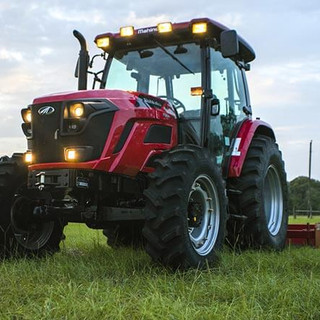
The tractor is the absolute backbone of any modern farm. These machines provide the high-horsepower pulling power and torque required to operate almost every other implement on the farm via the hitch and Power Take-Off (PTO) system.
Pros of Modern Tractors:
Highly versatile and compatible with hundreds of attachments.
Equipped with GPS and precision guidance for straight rows.
Reduces physical operator fatigue with ergonomic cabs.
Built to handle rugged, uneven terrain across hundreds of acres.
A 500-acre corn farm in West Texas relies heavily on high-horsepower row-crop tractors to handle large-scale planting and heavy tillage while minimizing the hours spent in the field.
2. Primary Tillage Equipment, Like Plows and Rippers
Before you can plant any seeds, you have to prepare the soil. The primary tillage implements break up compacted soil, turn it over, and cover the previous crop's residue to provide a clean seedbed.
Benefits of Primary Tillage Tools:
Breaks up hardpan soil layers for better root penetration. Naturally reduces weed germination by burying the weed's seeds below the surface. Improves soil aeration and water absorption. It can be used for a wide range of field sizes.
3. Secondary Tillage Implements: Disc Harrows and Cultivators.
Once the ground has been broken up, secondary tillage equipment, such as disc harrows, can help create ideal seedbed conditions. They pulverize large clods of dirt while leveling soil surfaces and cutting leftover crop stalks down for harvesting.
Pros of Secondary Tillage Equipment:
Creates a perfectly smooth, uniform seedbed for planting.
Promotes excellent seed-to-soil contact for uniform germination rates.
Easily automates the mixing of fertilizer or herbicide into topsoil. Works effectively across a wide variety of crops.
4. Precision Seed Drills and Planters
The correct depth and spacing of the seeds are very important for the successful growth of the plants. Vacuum systems and mechanical meters are used in modern planters and seed drills to accurately distribute seeds so that each plant receives all it needs to grow successfully.
Advantages of Precision Planters:
Precision planting promotes uniform emergence, reduces plant crowding, and helps lower planting time and labor costs.
It also increases the efficiency of field space, helping improve overall crop yields.
The initial investment in precision planting equipment can be significant.
The first cost of precision planting equipment can be quite high. Farmers appreciate that the immediate savings from reduced seed waste and increased yields more than offset the cost.
5. Mowers (Rotary Cutters and Shredders)
Pasture management, brush clearing, and shredding of crop residue after harvest require heavy-duty cutting equipment. This tool, known as a shredder or shredding deck, is PTO-driven and helps keep fields tidy and manageable.
Pros of Rotary Cutters:
Highly efficient for pasture maintenance and weed control.
Flexible attachment options for varying tractor sizes.
High versatility regarding rough, uneven field shapes.
Easily repositioned and transported between different properties.
Keep Your Farm Equipment in Good Shape
Even the most durable, efficient farm equipment parts need routine maintenance to perform at their maximum and last for a long time. Here are some key tips you need to know to improve performance and prolong the life of your equipment:
Replace worn ground-engaging parts such as disc blades, plow shares, and planter row units regularly to maintain optimal ground engagement. Inspect hydraulic hoses daily for cracks, leaks, or pressure drops, as well as regularly grease pivot points, bearings, and PTO shafts. Grease all pivot points, bearings, and PTO shafts as needed. And of course, always monitor engine oil, air filters, and fluid levels.
Avoid costly emergency repairs that may otherwise be needed. For safe field operation and longer tire life, check tire pressure and wheel bolts regularly. Keep your machinery in tip-top condition to make it last and avoid the costly repairs of breakdowns when least wanted.
What to Take into Account When Purchasing Farming Equipment
Every piece of machinery has distinct limitations and advantages that must be carefully weighed before purchase.
Requirements of Particular Crops: Specialty row crops, such as cotton or vegetables, require highly specific planter configurations and wheel spacing compared to grains like wheat.
Soil Type and Topography: Heavy clay soils require tractors with higher horsepower and heavier tillage tools, whereas sandy soils can be managed with lighter implements.
Dimensions of the Field: Large-scale farms require wide implements, such as 24-row planters, to finish work efficiently, whereas small-scale farms can get by with compact tractors and 4- to 6-foot implements.
Availability of Labor: Investing in larger, GPS-guided machinery allows a single operator to complete the work of multiple people, reducing overall labor requirements.
Budget: Prices vary significantly by brand and horsepower level. Factor in the long-term return on investment regarding fuel efficiency and reduced repair needs.
Optimize Your Harvest by Selecting the Right Equipment
The harvest you get will depend on the tractors and implements you use in combination. Agricultural machinery comes in a wide variety, and each implement has benefits for a particular type of acreage.
When buying farm implements, consider your soil conditions, field size, and budget. Working with a reliable local supplier, a good farm equipment repair service, and agricultural specialists will get you the right implements for your land.


Comments